
February 10, 2026
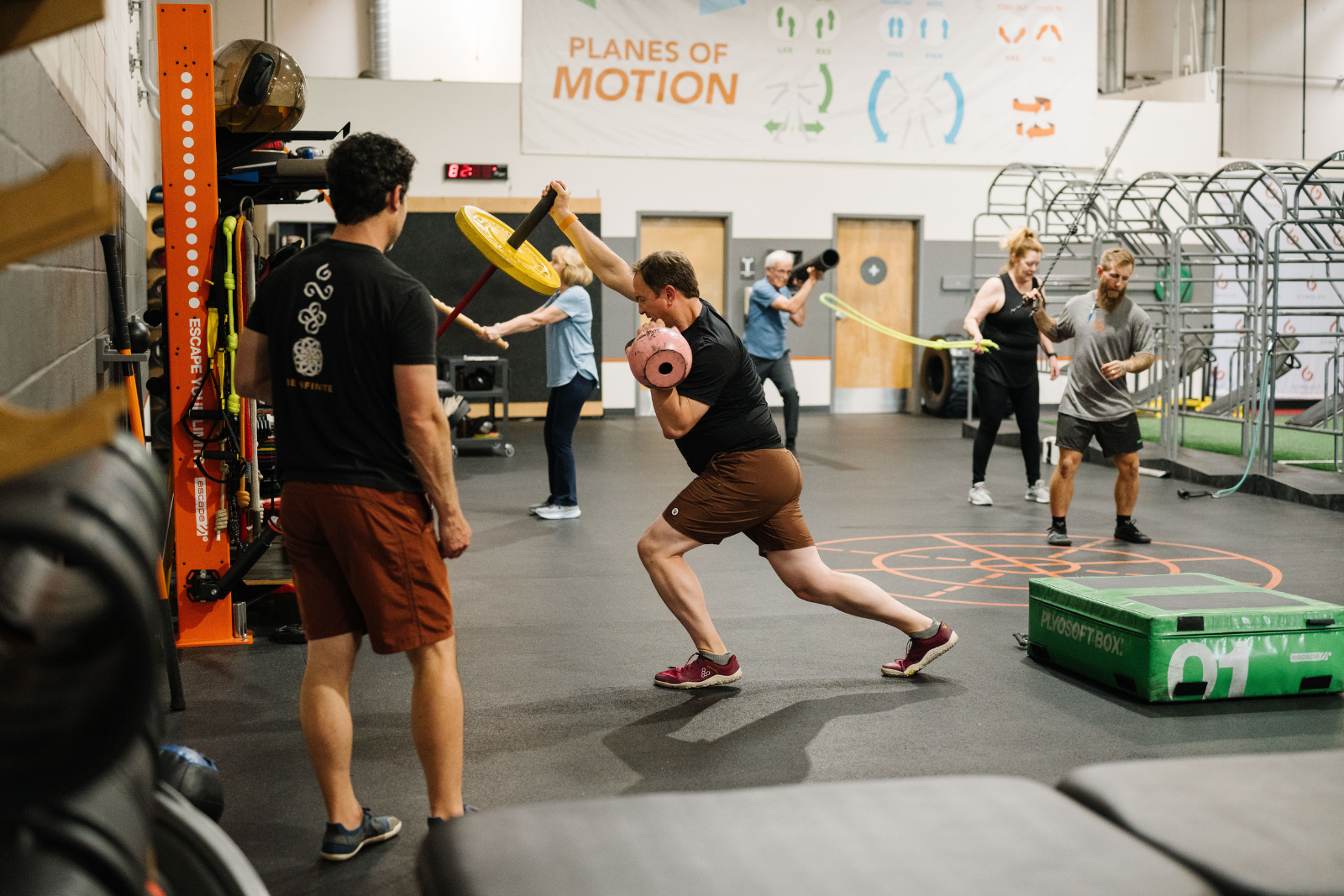
As we age, the goal of training shifts. It’s no longer about chasing aesthetics, burnout workouts, or arbitrary intensity.
It’s about preserving capacity, your ability to move, react, produce force, and participate in all of the activities you enjoy.
Three often misunderstood (and commonly avoided) training elements play a critical role in that process:
When applied intentionally and progressively, these are not “risky.”
They are protective.
Let’s break down why each matters, and what happens when they’re missing.
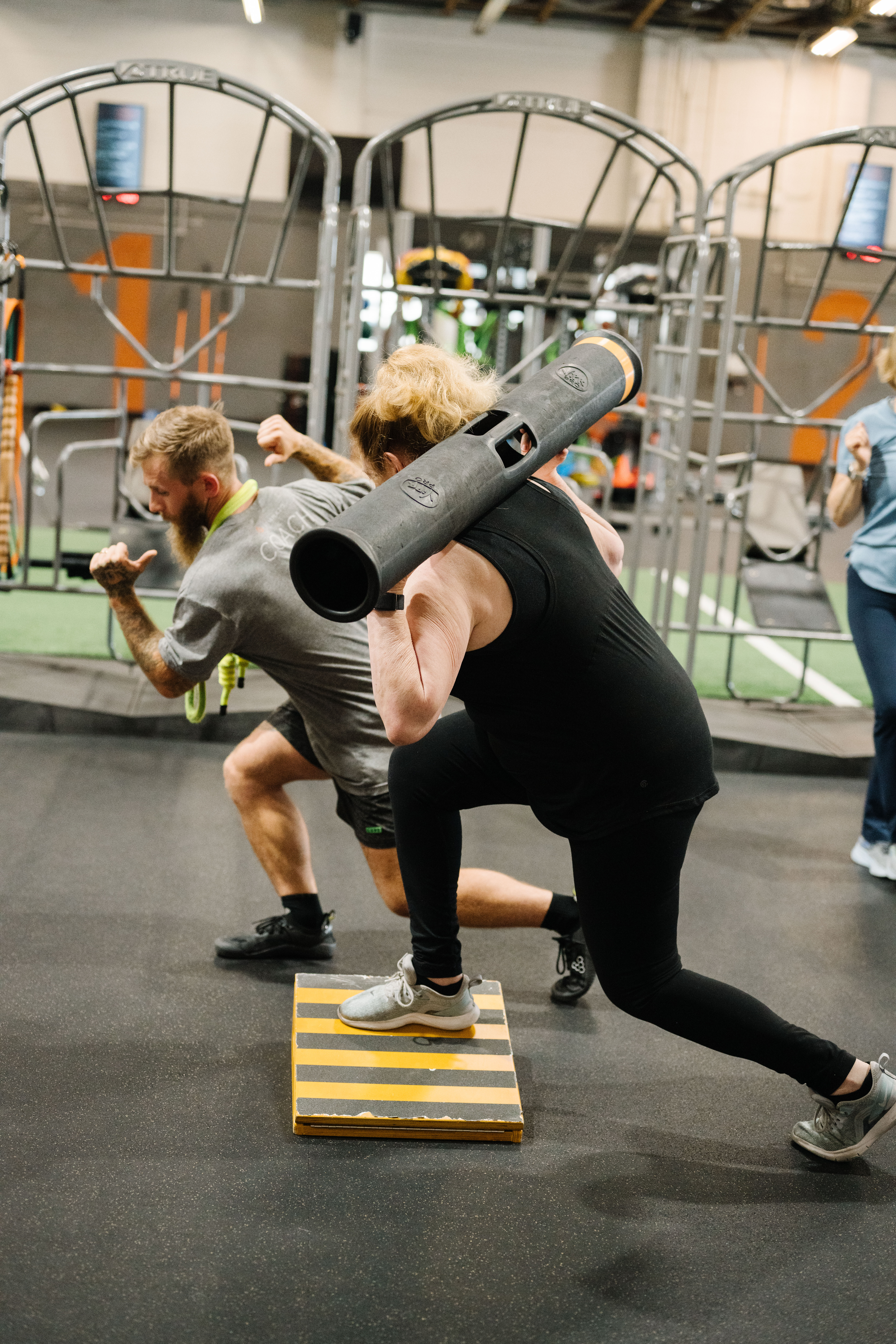
Load training means applying external resistance to the body, weights, kettlebells, sandbags, sleds, or other tools that challenge your muscles and connective tissues.
Starting in midlife, adults lose 3–8% of muscle mass per decade if it isn’t trained. This loss doesn’t just affect strength, it impacts:
Muscle is not just for performance. It is a protective organ that supports your joints, absorbs force, and allows you to move with confidence.
Bones also depend on load. They adapt to stress. Without it, bone density declines, increasing fracture risk, especially in women.
Without progressive resistance:
Load training doesn’t mean lifting heavy all the time.
It means training your body to handle force, appropriately scaled to you.
Sprint training isn’t just about running fast. It’s about power, speed of contraction, and neuromuscular efficiency.
As we age, we don’t just lose strength, we lose the ability to produce force quickly. That loss shows up when you:
Sprint-based work trains the nervous system to communicate faster with muscles.
Fast-twitch muscle fibers, the ones responsible for power and quick reactions, are the first to decline with age. Sprint training helps preserve them by teaching your body to:
This doesn’t require all-out maximal sprints.
It can include:
Without speed and power training:
Sprint work keeps your nervous system sharp and responsive.
Impact training is often misunderstood, and often avoided as we age, yet it plays a critical role in bone health and tissue resilience.
Impact means the body experiences ground reaction forces, through jumping, landing, hopping, or bounding.
Bones respond best to dynamic, varied loading, not just slow resistance. Impact sends a clear signal to the skeletal system to maintain strength and integrity.
Impact training also:
This is less about jumping high and more about landing well.
Without impact exposure:
Ironically, avoiding all impact can increase injury risk when real-life impact inevitably occurs, like stepping off a curb, hiking uneven terrain, or catching yourself during a stumble.
Impact training should be progressive and intentional.
Longevity isn’t built by maxing out one quality while ignoring others.
It’s built by layering capacity over time.
When trained together, scaled to the individual, they support:
This isn’t about training like you’re 25.
It’s about training so you can keep doing the things you love at 45, 65, and beyond.
Aging doesn’t mean slowing down, it means training smarter.
The goal isn’t to avoid stress.
The goal is to apply the right stress, at the right time, in the right way.
When load, sprint, and impact are respected and integrated, they become tools for resilience, not risk.
And that’s what longevity training is really about.
Share it: